
What is it like to experience OCD as a kid?
In this video, kids with OCD talk about different thoughts, compulsions, and rituals that they experience.
This video is courtesy of UNSTUCK: An OCD kids movie(opens in new tab).
Online OCD Camp: January 30–31, 2027
 The IOCDF Online OCD Camp is a virtual weekend created for youth ages 6–17 with OCD, along with their siblings, parents, and caregivers.
Through interactive activities, educational sessions, and opportunities to connect with others who understand OCD, Camp gives kids and families a supportive space to learn, build confidence, and feel less alone.
Join families from across the OCD community for a weekend focused on connection, education, support, and fun.
OCD can look different in every child.
Some symptoms may be easy to recognize, while others can look like worry, perfectionism, avoidance, frustration, or everyday childhood behaviors.
How OCD Might Look in Kids & Teens
|
What Parents & Caregivers May NoticeSometimes the first signs of OCD are changes in a child’s behavior or daily routine. Parents and caregivers may notice:
|
Families often make these changes because they want to help.
However, accommodating OCD can unintentionally strengthen the OCD cycle. Learning to recognize these patterns can be an important step toward getting the right support.
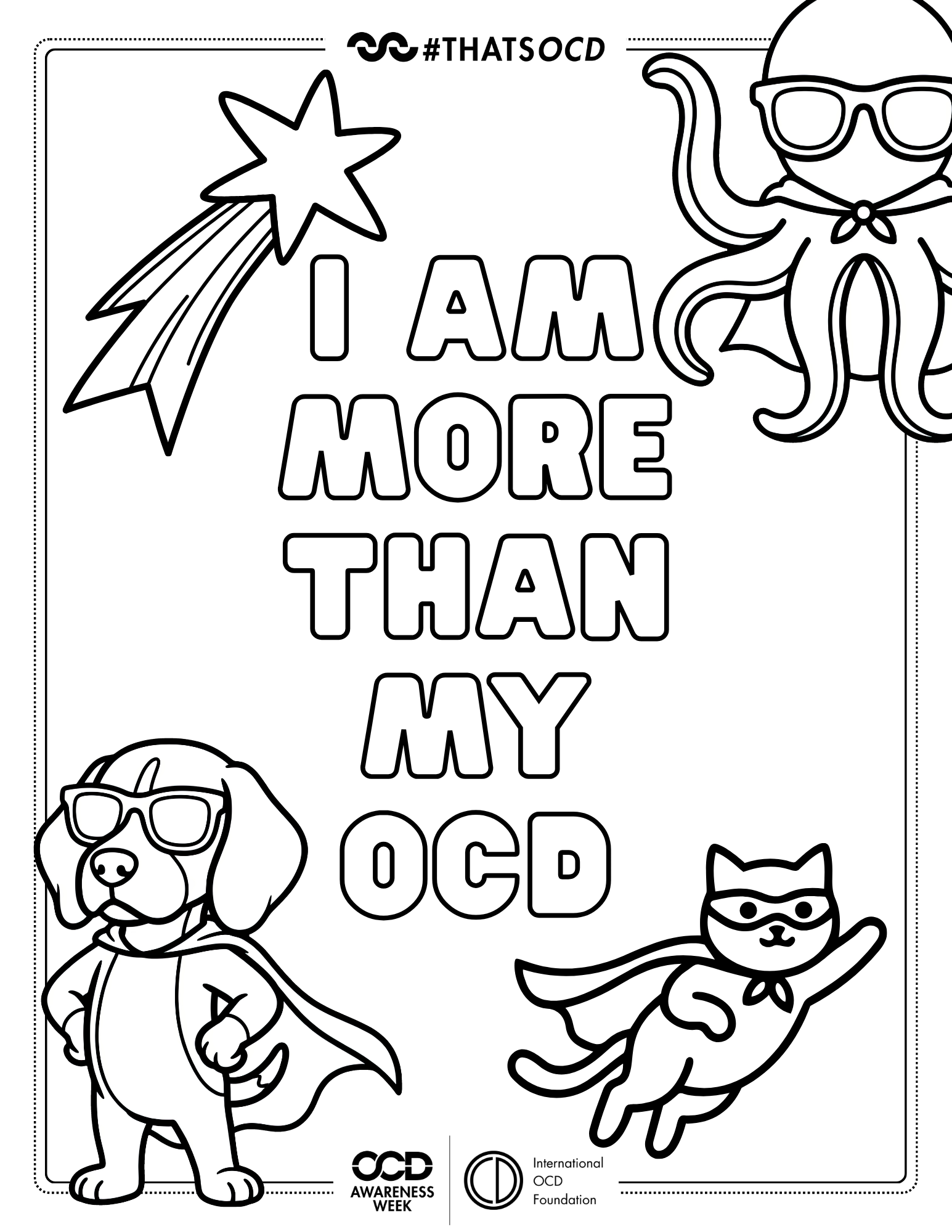
The IOCDF’s OCD & Kids Worksheet features coloring activities and affirmations families can do together to support a child with OCD. Enter your information in the form to receive your free download.
90%
of children and teens with OCD experience impairment in at least one area of their lives.
When Does It Become OCD?
In general, OCD is diagnosed when these obsessions and compulsions become so time-consuming that they negatively interfere with the child’s daily life.
In most cases, the obsessions and compulsions become gradually more severe over time until they get to this point.
When OCD Symptoms Appear Suddenly
In rare cases, symptoms may develop seemingly “overnight” with a rapid change in behavior and mood, and sudden appearance of severe anxiety.
Sometimes this happens due to an infection, such as strep throat, that causes the child’s immune system to attack the brain instead of the infection. This is called Pediatric Autoimmune Neuropsychiatric Disorder Associated with Streptococcus (PANDAS).
When OCD onsets suddenly and dramatically without any evidence of an immune infection; this is called Pediatric Acute-Onset Neuropsychiatric Syndrome (PANS).
How is OCD different from other childhood routines?
It is common for children to become fascinated with certain things, and to have routines around meals, bedtime, etc. However, OCD is different from these preoccupations and routines. The difference here is that OCD is not something a kid or teen can simply “snap out of.” The obsessions they suffer from and the compulsions they use to try to get rid of their bad feelings are often not easy to control. Compulsions or rituals may become too frequent and/or too intense or upsetting for the child, and may begin to get in the way of their daily life.
It is important to remember that OCD is not a result of something that the child, parent, or others did wrong. There is no “cure” for OCD, but OCD is very treatable – especially with a type of therapy called exposure and response prevention (ERP) and medication. Your child or teen’s future success does not have to be limited by OCD!